
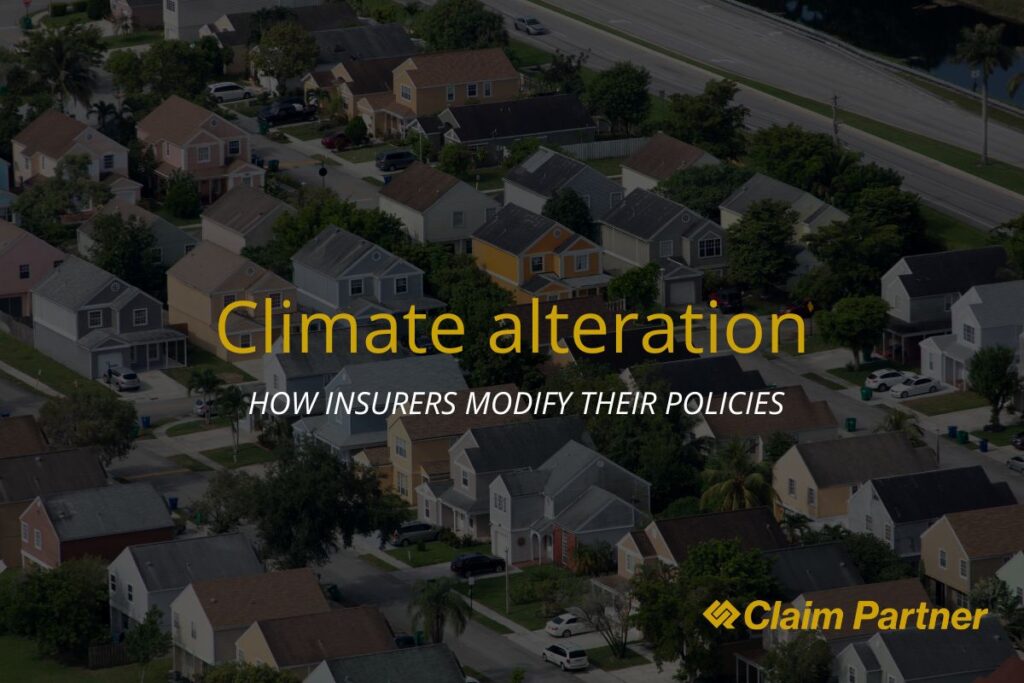
Climate change is no longer a topic for the future: today, it is changing the way insurers calculate, cover, and exclude water damage. From torrential rains to more frequent and intense storms, the risk to homes has multiplied. If you are a homeowner, updating your policy and understanding how insurers now operate can mean the difference between compensation and a significant loss.
1. How are insurers changing their risk models?
Insurers no longer rely solely on historical maps to assess risks. Today, they use predictive models with artificial intelligence, satellite sensors, and real-time data analysis. This allows them to:
- Assess areas that were not previously at risk but are now experiencing recurrent flooding.
- Detect micro-flooding and prolonged moisture that affects roofs, foundations, and electrical systems.
- Identify properties in areas that may become “uninsurable” in the near future.
In addition, they are incorporating parametric insurance, a type of insurance that does not depend on visible damage, but rather on pre-established conditions (for example, if it rains more than X mm, the insurance is activated).
2. Increase in premiums and reduction in coverage
Many insurance companies are raising premiums significantly in vulnerable areas, especially in states such as Florida, Texas, and California. Others are opting to:
- Eliminate coverage for gradual water damage or leaks.
- Refuse policy renewals in high-risk areas.
- Reduce insured amounts if the home has not undergone structural improvements or maintenance.
This forces homeowners to be much more strategic when it comes to protecting and securing their homes.
3. Recommendations for property owners
In light of this new reality, these actions are key:
Review your current policy
Check if your policy includes coverage against:
- Flash floods or slow leaks.
- Damage from severe storms (water + wind).
- Loss of use (if you have to move out while repairs are being made).
Ask about extended or parametric coverage
Some companies offer coverage that is automatically activated if extreme weather conditions are met. These policies may be more expensive, but they offer quick payments and less paperwork.
Strengthen your home
Increasing the resilience of your property not only reduces actual risk, but can also give you access to discounts or rebates. Examples:
- Seal foundations and walls against moisture.
- Install sump pumps or drainage systems.
- Check the condition of the roof and exterior electrical connections.
Consult with experts
A public adjuster can help you understand the actual terms of your policy, identify potential coverage gaps, and prepare you for a future claim.
4. What if you are already in a risk area?
- Consider switching insurers if your current one does not offer options adapted to the new climate.
- Consider adding flood insurance, even if you are not in a mandatory zone (FEMA).
- Use apps or sensors to monitor humidity or structural damage in advance.
The rules of the game have changed. Climate change not only affects the planet, it also directly impacts your home and your financial security.
Being informed and adapting in time gives you an advantage. Don’t wait for the next storm to hit to realize that your policy doesn’t protect you enough.
Would you like us to help you review your policy?
If you want to know whether your coverage is truly prepared to face these new risks, contact us. At The Claim Partner, we analyze your case, review your policies, and help you prepare for what lies ahead.