
Halloween in Florida is one of the most eagerly awaited dates of the year: lights, inflatable figures, pumpkins, and all kinds of decorations take over neighborhoods.
But it is also the time of year when claims for electrical damage, house fires, and outdoor accidents increase the most.
At The Claim Partner, as public adjusters, we want you to enjoy the season without any setbacks—neither with your home nor with your insurance policy.
That’s why we’ve prepared this guide with clear, practical tips tailored to Florida’s climate.
Recommendations for avoiding risks with Halloween decorations at home
1. Context matters: Florida is unforgiving when it comes to humidity and wind.
Although Halloween is celebrated in the middle of fall, humidity remains high and coastal winds are unpredictable.
That means your decorations—especially electric or inflatable ones—are exposed to conditions that can damage them or turn them into a real hazard.
Key recommendation: Before decorating, check the weather forecast. If there is a storm or high wind warning, wait or secure your outdoor decorations very well.
A poorly anchored decorative object can hit your house or your neighbor’s… and end up becoming an expensive claim.
2. Before taking out the box of decorations: do a quick inspection.
Un paso que muchos omiten es revisar el estado de los adornos del año anterior.
Cables pelados, bombillos rotos o enchufes corroídos por la humedad son un accidente esperando ocurrir.
Haz esta mini auditoría:
- Desecha luces o extensiones que estén dañadas.
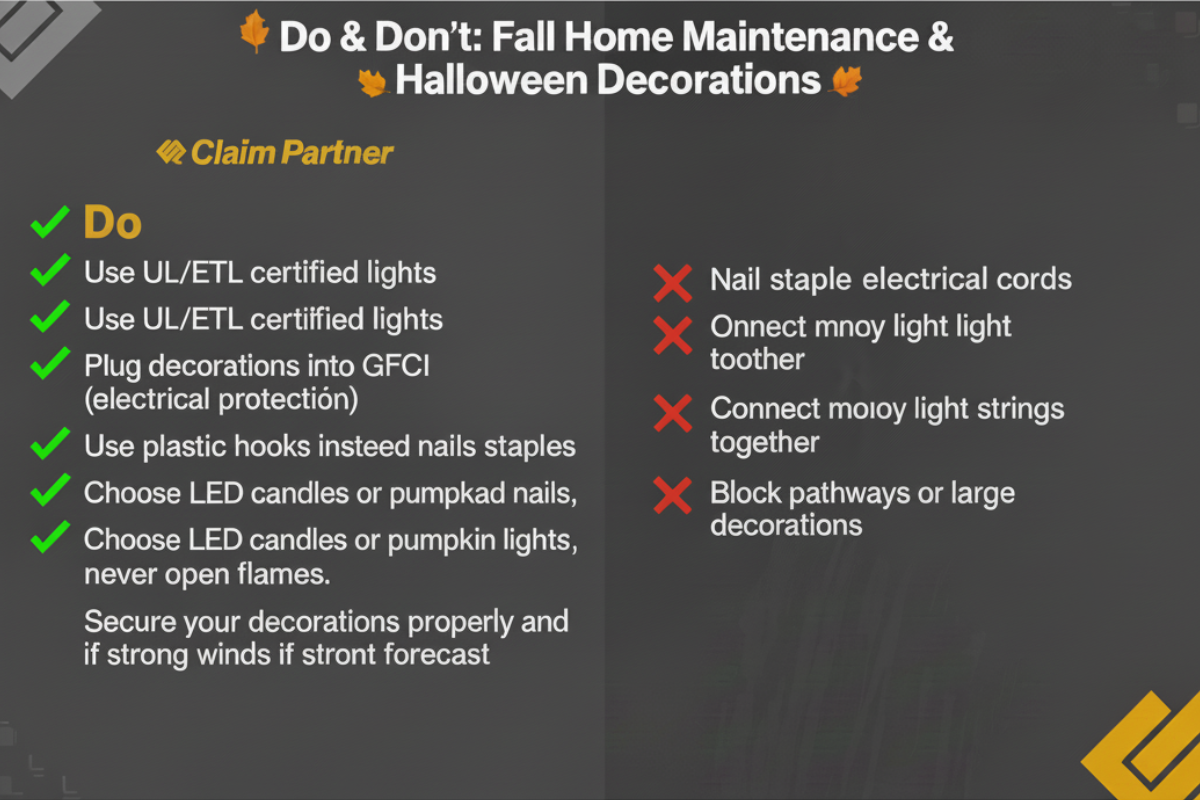
- Usa solo decoraciones certificadas para exteriores (UL, ETL o CSA).
- Evita las regletas comunes: si vas a conectar varios adornos, usa tomas con protección GFCI (contra fugas eléctricas).
- Asegúrate de que las conexiones no toquen el suelo ni zonas húmedas.
Unos minutos de revisión te ahorran el riesgo de cortocircuitos o incendios.
3. Electricidad: el detalle que más ignoramos
Las luces y efectos eléctricos son parte del encanto, pero también del riesgo.
En Florida, la humedad puede filtrarse en conexiones, y eso es suficiente para provocar un fallo o una chispa.
Hazlo bien:
- Coloca ganchos plásticos o bridas, nunca claves o grapas metálicas.
- No conectes más tiras de luces de las que indica el fabricante.
- Desconecta las decoraciones antes de dormir o salir de casa.
Y si algo huele a quemado, parpadea de forma irregular o se recalienta: desconéctalo de inmediato.
4. Fuego y velas: el clásico error
Las velas dentro de calabazas son bonitas, pero también son una de las principales causas de incendios en Halloween según la NFPA (Asociación Nacional de Protección contra Incendios).
Opta por luces LED o velas electrónicas: son seguras, duraderas y mantienen el mismo efecto.
Si aún prefieres la llama real:
- Coloca la vela sobre una base estable.
- Nunca la dejes sin supervisión.
- Asegúrate de que esté alejada de telas, disfraces, hojas secas o pasillos.
5. Adornos grandes e inflables: fija, ancla y revisa
Giant inflatables, animated figures, or hanging decorations must be securely fastened with ropes or stakes.
Moderate winds can easily blow them away and cause damage to roofs, windows, or vehicles.
Adjustment tip: If there is a storm warning or strong gusts, disconnect and store everything that is outside.
Claims for decorative objects that hit other properties are more common than you might think… and in most cases, they are not covered if there was negligence on the part of the insured.
6. Safety in corridors and access points
Halloween means children running around, families visiting, and lots of lights on.
Prevent simple but common accidents:
- Secure cables and extension cords to the floor, out of the way of foot traffic.
- Light stairways, entrances, and walkways with low-voltage LED lights.
- Don’t block exits or doors with bulky decorations.
Well-lit, obstacle-free access not only prevents falls, it also improves the overall safety of your property.
7. Document your efforts (yes, that counts too).
As adjusters, we know that prevention is proven by evidence.
If you invest time in installing your decorations properly, take photos of the final result (lights, connections, anchors) and keep receipts for certified electrical equipment.
In the event that something goes wrong—a short circuit, wind damage, or a small fire—that documentation can make all the difference in your insurance claim.
8. In summary: what you should and should not do
Halloween is a time to enjoy, not to lament damage or claims.
With a little prevention, you can keep your home safe, your decorations intact, and your policy hassle-free.
At The Claim Partner, we support homeowners before, during, and after unforeseen events.
And if something does go wrong, we’re here to review your policy, assess the damage, and represent you before your insurer with technical and professional support.
Remember: good decoration impresses your neighbors; a secure installation protects your home.
You may also be interested in reading:
- How to prepare your smart home for fall and winter in Florida
- Checklist: small things that make a big difference after damage to your home
- 10 preventive maintenance tasks for homes that you should do before it’s too late