
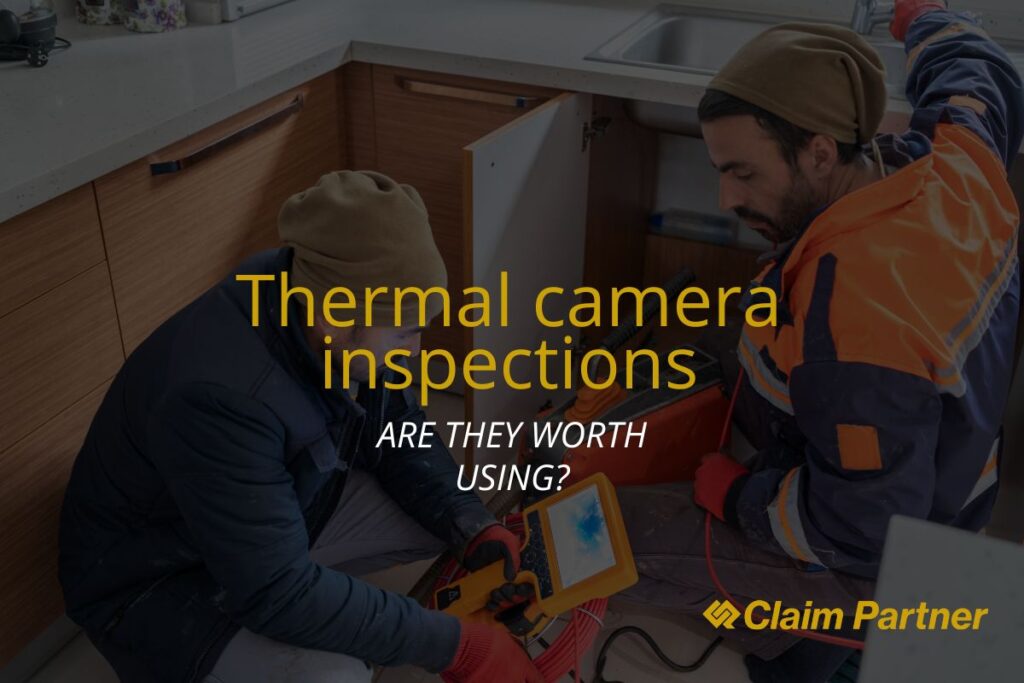
A home thermal camera is a device that detects temperature differences on surfaces such as walls, ceilings, and windows. Using infrared images, it shows colder or warmer areas, which helps identify:
- Thermal bridges (areas where heat escapes or cold enters)
- Hidden moisture
- Water leaks in roofs or walls
- Loss of energy efficiency
It is a useful tool for homeowners, contractors, and even public adjusters who want to get a preliminary idea of potential damage.
Advantages of using home thermal cameras
- Quick inspection without breaking anything
- Early detection of water damage
- Easy to use (many connect to your cell phone)
- Ideal for supporting an insurance claim with visual evidence
Limitations of thermal cameras
- They do not measure humidity directly, only temperature differences.
- They can confuse reflections or air currents with humidity.
- They are not a substitute for a professional inspection.
Therefore, it is always advisable to confirm the results with a moisture meter or contact a professional who can correctly interpret the images.
Who is already using them?
- Homeowners who want to prevent major problems
- Home inspectors
- Restoration contractors
- Public adjusters who gather evidence for claims
In more technical contexts, thermal cameras are combined with written reports, moisture tests, and photographs to build a solid case for insurance purposes.
How does this help your claim?
If you suspect a leak or water damage, a thermal image can be the first step in:
- Justifying the need for a more thorough inspection
- Visually documenting a problem for your insurance company
- Preparing a more complete home insurance claim
If you don’t know how to do this, our team can help you identify the damage, document it correctly, and present your case to the insurance company.
What if you don’t know how to interpret the images?
That’s where we come in. We have experts and partners who can help you:
- Confirm whether what you see is actually structural damage or moisture damage.
- Perform a detailed inspection with a technical report.
- Submit a solid claim to the insurance company, without errors or omissions.
Contact us and we will advise you step by step. We will help you diagnose the problem before repairing it and effectively claim what you are entitled to.
Are you interested in learning more about tools for detecting damage to your home? Check out our article What type of water damaged your home? This may define your claim, where we explain how to classify water damage according to your insurance policy.
Frequently asked questions
- Where can’t these cameras be used?
On other people’s property without permission or in areas where the privacy of third parties is violated. In your home, there are no legal restrictions on their use. - Do they replace an expert?
No. They are a support tool, but they do not replace a complete technical evaluation. - What type of camera should I buy?
Look for models with good resolution (minimum 160×120) that are compatible with your cell phone. There are also portable models with built-in screens.