
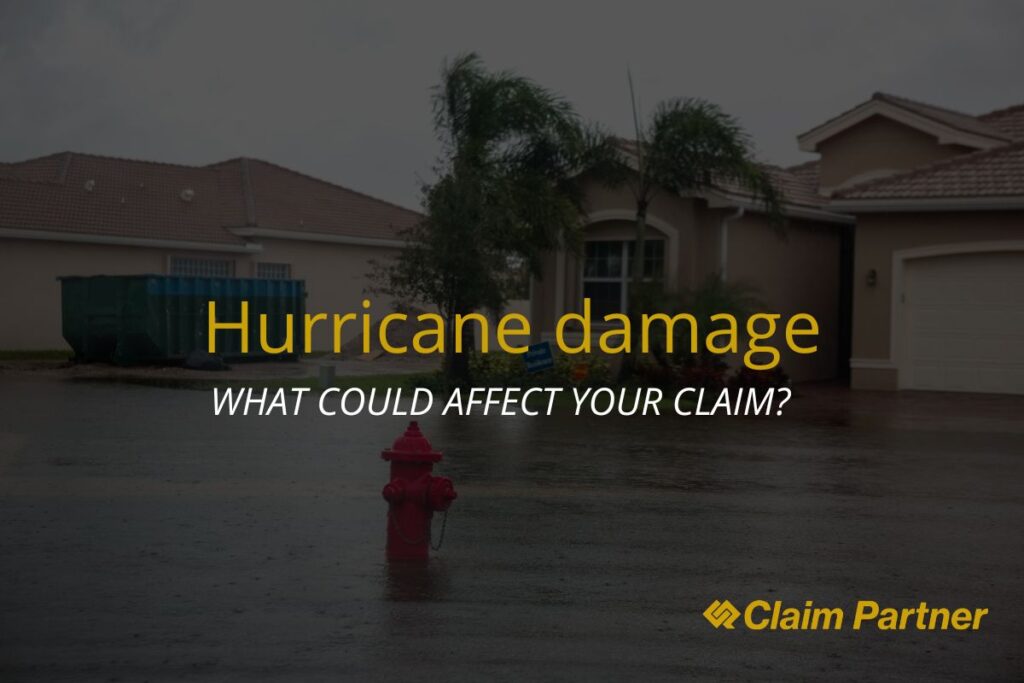
Hurricane claims to insurance companies each season are becoming increasingly perplexing for homeowners in Florida. Not only do they face property damage, but also the confusion of seeing their insurance company deny, delay, or reduce their compensation.
Hurricane claims in Florida are more complex than many people realize, and these five facts could make the difference between a fair response… or major frustration.
1. The hurricane deductible is not like other damage deductibles.
In Florida, most insurance policies apply a special deductible for hurricanes, which is not fixed but rather a percentage of the insured value. For example, if your home is insured for $400,000 and your hurricane deductible is 5%, you may have to cover the first $20,000 out of pocket before receiving assistance.
What to do: Review your policy and make sure you know this number. Many homeowners discover this detail right after a disaster.
2. You have little time to file a claim
Hurricane claims must be filed almost immediately. If you wait too long, the insurance company could reject your claim for being “late.” Florida usually sets limits of between 48 and 72 hours to start the process after the event.
What to do: document everything with photos and videos, and contact your insurance company as soon as possible.
3. Most policies do NOT cover flooding.
Although it seems logical that water entering your home after a hurricane would be covered, flooding is not always included. For that, there is an additional policy, often offered by the NFIP (National Flood Insurance Program).
What to do: check if you have this additional coverage and review its conditions. Without it, you could be left without compensation for the most common damages.
4. Mold and progressive damage may not be compensated.
Florida, with its warm, humid climate, is fertile ground for mold. After a hurricane, this type of damage can appear days or weeks later. If it is not detected and documented in time, many insurance companies consider it “lack of maintenance.”
What to do: Schedule a professional inspection after the hurricane, even if you think there was no visible damage.
5. Your insurance adjuster does not work for you
This may surprise you: the insurance adjuster who assesses your damages represents the insurance company. That’s why many homeowners in Florida choose to hire a public adjuster, who defends your interests and handles the entire claims process.
What to do: If you have questions or your claim has been reduced, denied, or ignored, contact a public adjuster such as The Claim Partner. They can help you recover what you are entitled to.
What can we learn from hurricane claims in Florida?
Every year, thousands of families face the frustration of not receiving the support they expected from their insurance. But this often happens because they don’t know the details of their policy, don’t act quickly, or don’t have adequate support.
Do you need help with your claim?
At The Claim Partner, we are public adjusters specializing in hurricane claims in Florida. We don’t represent the insurance company, we represent you. We help you review your policy, prepare your claim correctly, and negotiate so you receive fair compensation.
Write to us and let’s talk, no strings attached. If you’ve already suffered damage or simply want to be prepared for what’s to come, now is the time to act.
Articles that may interest you:
- What your property insurance policy covers (and doesn’t cover) in the event of a disaster
- What to do before, during, and after a hurricane to protect yourself and your loved ones
- Free Guide: How to Maximize Your Insurance Claim After a Disaster on Your Property
- Florida Hurricane Season 2025: How to Prepare Your Home and Protect Your Loved Ones
- Hurricane Damage: What You Need to Know About Compensation
- How to Apply for State or Federal Assistance After a Hurricane in Florida
- Hurricane Claims in Florida: 5 Facts That Could Affect You (and You Didn’t Know)
- Is Your Home Ready for Hurricane Season? A Point-by-Point Checklist
- What to Do If the Hurricane Has Passed and Your Home Is Damaged
- How to Prevent Short Circuits and Fires During Thunderstorms