
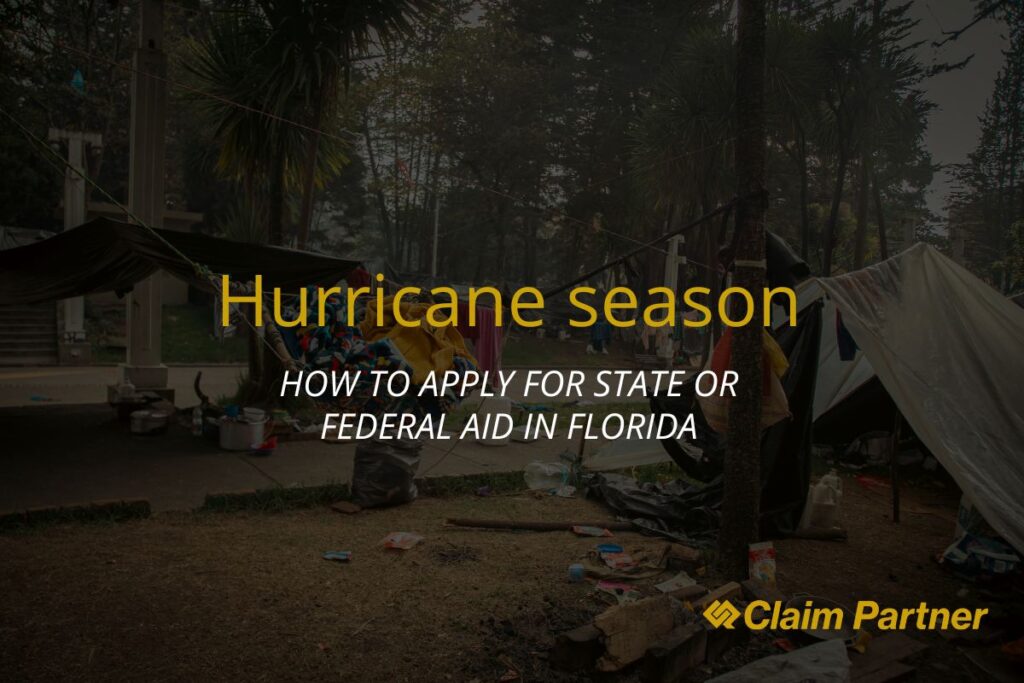
If your home was affected by a hurricane in Florida, you may be eligible for state or federal assistance. Beyond home insurance, this aid can help you recover without having to bear all the costs yourself. Here we explain how to access it and which agencies offer support.
1. Federal assistance via FEMA
Following a disaster declaration by the president, FEMA offers Individual Assistance (IHP) to homeowners whose homes and possessions were damaged and are not fully covered by insurance.
You can start your application in two ways:
- By calling 800-621-3362 (TTY 800-462-7585).
- Online at DisasterAssistance.gov
FEMA may also automatically refer you to low-interest loans from the SBA to cover repairs and replacement of property.
Basic requirements:
- Identification document (such as SSN).
- Proof that the home is your primary residence.
- Policy number and evidence of insurance claim.
2. State assistance: EMERGENCY DIVISION (FDEM)
The Florida Individual Assistance Program coordinates disaster relief: when a federal disaster is declared, FDEM publishes telephone numbers and local centers to provide guidance to those affected.
It is also responsible for managing debris removal assistance and emergency measures in collaboration with FEMA, through the Federal Public Assistance Program.
3. Special recovery programs
- Rebuild Florida Housing Repair and Replacement Program: Assistance for low-income homeowners after hurricanes such as Ian.
- Florida Hurricane Restoration Reimbursement Grant Program: Reimbursements for restoration after coastal erosion or storm preparedness.
- Local programs such as Pinellas County Home Repair: They provide up to $30,000 in assistance to low- and moderate-income homeowners.
4. Assistance for temporary shelters
If your home is uninhabitable, FEMA activates Transitional Sheltering Assistance (TSA) programs, providing temporary accommodation in approved hotels while your home is being repaired.
5. Tips for getting help effectively
- Apply for assistance as soon as possible: many programs offer limited windows after a disaster is declared.
- Have your insurance claim number handy.
- Keep documents: evidence, receipts, inspection reports, photos.
- Check your eligibility frequently at DisasterAssistance.gov and state websites.
- Contact a public adjuster, such as those at The Claim Partner, to help you integrate these benefits into your home insurance claim.
Federal and state aid can be crucial to recovering after a hurricane. Knowing about and accessing these programs, combined with an organized claim backed by a public adjuster, significantly increases your chances of success and allows you to rebuild with greater peace of mind.
Check out our resources on hurricane season in Florida:
- What to do before, during, and after a hurricane to protect yourself and your loved ones.
- Hurricane damage: what you need to know to get compensation.
- Florida hurricane season 2025: how to prepare your home and protect your loved ones.
- Tips for Florida homeowners: how to face the 2025 hurricane season with the right insurance.
- How to apply for state or federal assistance after a hurricane in Florida.
- Hurricane claims in Florida: 5 facts that could affect you (and you didn’t know).
- Is your home ready for peak hurricane season? Checklist to review point by point.
- What to do if the hurricane has passed and your home is damaged.
- How to prevent short circuits and fires during thunderstorms.